
Wheel Spacers
1 product
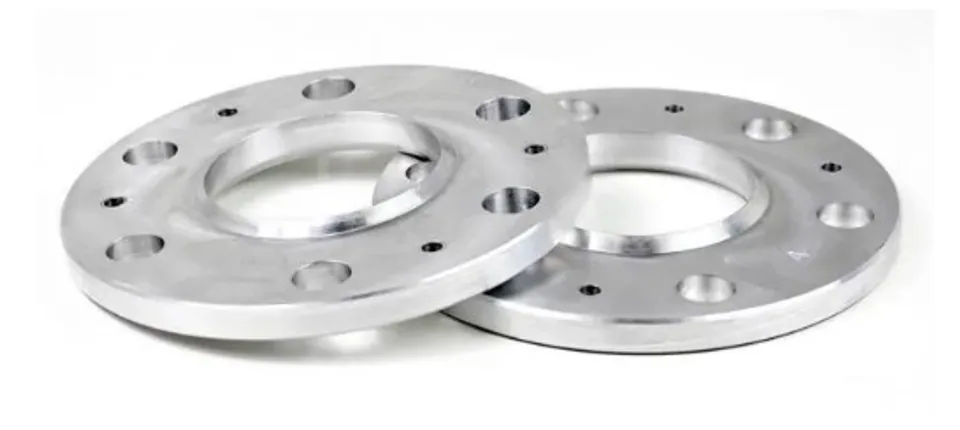
About Wheel Spacers
A spacer pushes the wheel out by its own thickness, and on a truck that's solving two problems at once. Lift a truck, put a bigger tire on it, and a deep backspacing factory wheel starts catching the upper control arm. A spacer moves the tire away from it. On a Jeep the factory wheel sits tucked inside the flare, and a spacer brings it out to the edge.
Truck spacers are nearly all the bolt on kind. It bolts to the hub on your factory studs with its own nuts, and the wheel bolts to studs pressed into the spacer, so you've got full thread engagement at any thickness. Slip on spacers that reuse the factory studs are a thin part, and they're only good for a small adjustment. ReadyLift builds the bolt on style for the common truck patterns.
Hub centric is the rule, and it matters more here because a truck wheel is heavy. You want a lip matching the hub and another matching the wheel, so everything stays where it should be. A lug centric spacer is a vibration you'll chase for months. Torque the spacer to the hub, the wheel to the spacer, then retorque after the first drive and again after the first trail day.
- By brand
- ReadyLIFT1
Common questions
- Are spacers safe on a truck
- A hub centric bolt on spacer from a real maker, torqued to spec and retorqued after the first drive, is as safe as the wheel bolted to it. What fails is a lug centric spacer that shakes, a slip on thick enough to leave the nut short of thread, or one nobody checked after a trail day. Get those right and it's less backspacing.
- Will spacers stop my tire rubbing the arm
- Usually, yes, because that rub's the inside of the tire meeting the upper arm and the spacer moves the tire outward. What you trade is clearance at the fender and the flare, so a tire that now clears the arm can start catching the fender at full lock. The wheel listings show backspacing that clears both ends of the problem.
- Do truck spacers need longer studs
- Bolt on spacers don't, because they carry their own studs and the factory ones only hold the spacer itself. Slip on spacers reuse the factory studs and give up thread engagement with every millimeter, so anything past a thin one wants longer studs pressed into the hub. Most truck spacers are bolt on for that exact reason.
- Hub centric or lug centric on a truck
- Hub centric, and more so on a truck than anywhere else because the wheel and tire weigh so much. The hub lip carries that weight and the studs only clamp, which is how the truck left the factory. A lug centric spacer asks studs to center a heavy wheel, and you'll get a shake at speed that no balance will cure.
Wheels and tires ship free to the lower 48.
Pick your truck and you'll only see parts that fit it.
Pay over time with Affirm, PayTomorrow or PayPal.
Call us at 888.888.0512 on weekdays.
* Free shipping on wheel and tire orders over $500 to the lower 48. Parts ship at the rate shown in your cart.